

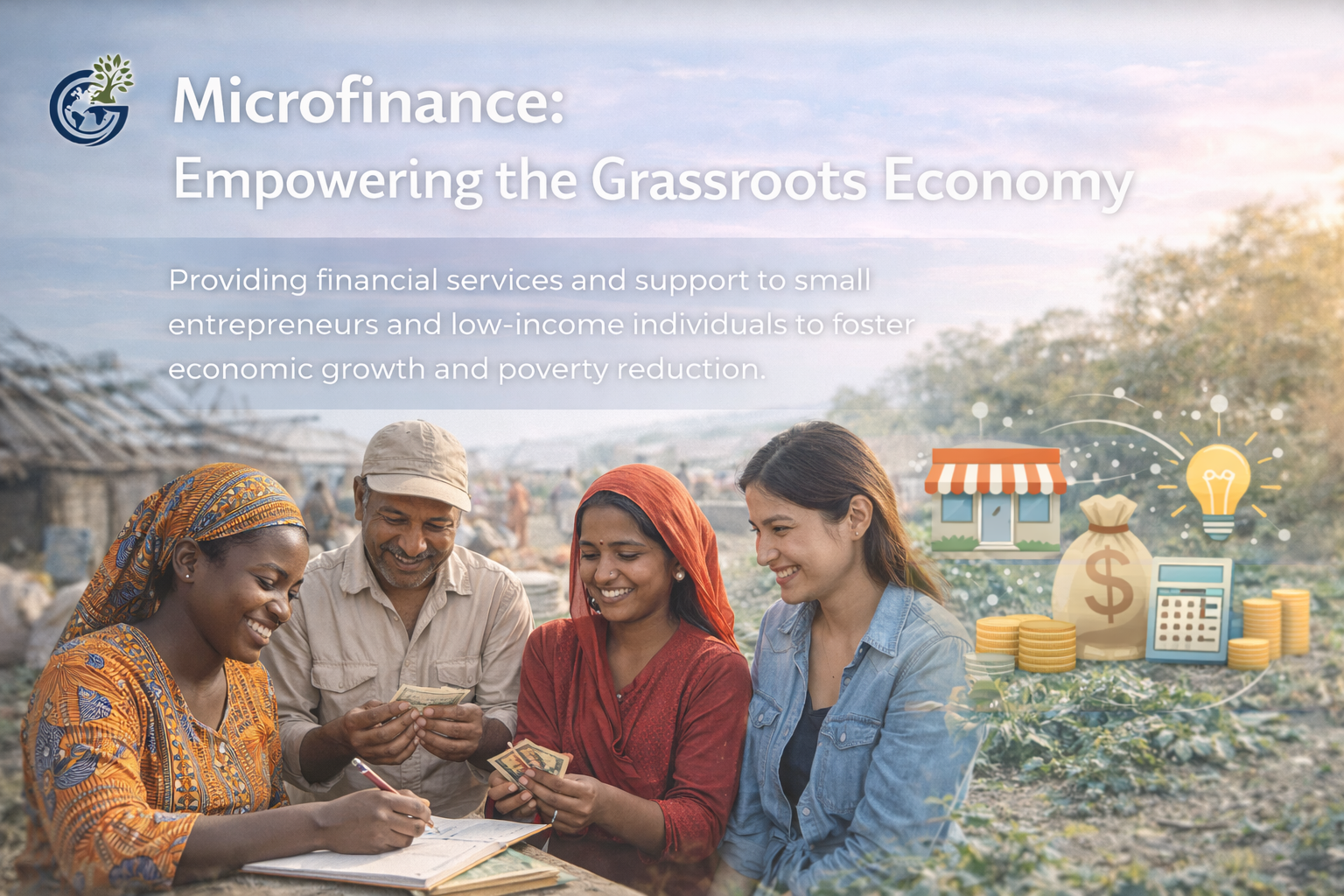
For poor entrepreneurs, the biggest obstacle to growth is often the lack of access to traditional banking services. Microfinance—the provision of small, low-interest loans—fills this gap. These loans are often enough for a woman to buy a sewing machine, a farmer to purchase seeds, or a shopkeeper to stock inventory.
The success of microfinance lies in its community-based approach. Borrowers often form groups that provide mutual support and ensure high repayment rates. This fosters a sense of accountability and builds social capital within the community.
Development foundations utilize microfinance as a tool for financial inclusion. By providing the initial capital and training in financial literacy, they help individuals move from subsistence to sustainability, creating a ripple effect of economic growth at the grassroots level.